Rotterdam’s floating dairy farm sells 28 cows after flooring dispute and berth restrictions
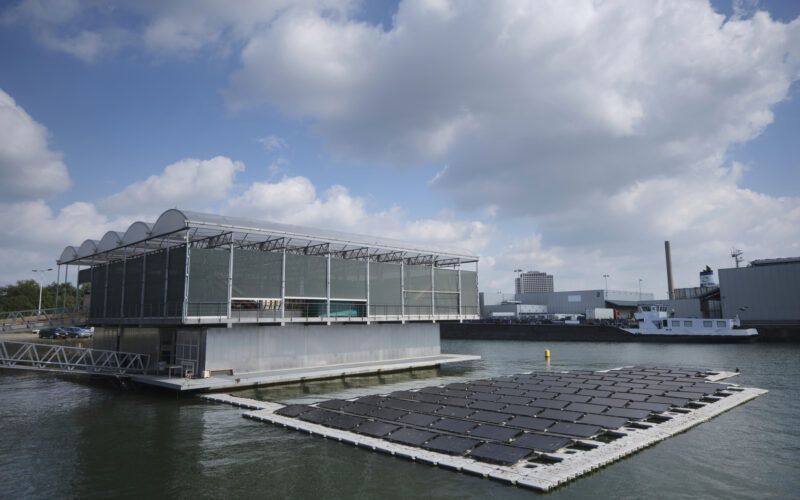
Founders Peter and Minke van Wingerden operated the dairy on a purpose-built concrete pontoon with three levels in Rotterdam Harbour. Described as the world’s first floating dairy farm, it housed Meuse-Rhine-Issel (MRI) cattle. Farmers Weekly reported that the decision to sell the animals followed a regulatory impasse and uncertainty over how long the platform could remain at its location.
The flooring dispute began when the original slatted rubber surface deteriorated. The operators fitted replacement rubber mats intended to improve comfort, grip and hoof health for the cattle. Municipal regulators required the particular flooring model to hold Dutch national certification confirming its ammonia-emissions performance. The manufacturer declined to pursue certification because of the expense and time involved for an installation of such limited scale, leaving the replacement surface without the required approval.
Local authorities threatened fines of €9,000, equivalent to NZ$16,000, for each week the uncertified floor remained in place. Removing it was the condition for avoiding those penalties. The requirement left the operators unable to keep the cattle aboard without facing repeated financial sanctions, according to the account. The dispute concerned both the replacement flooring and the certification needed to establish its compliance with environmental standards.
Separately, Rotterdam’s port authorities extended permission for the farm’s berth by just 18 months, citing longer-term redevelopment plans for the dock basin. The founders faced having to move the installation, along with infrastructure relocation costs described as prohibitive. The short renewal and the continuing flooring dispute preceded their decision to dispose of the herd and reorganise the business under the name Floating Farm 2.0.
The revised operation grows basil, mint, microgreens and edible flowers indoors, using LED lighting for vertical cultivation. Cheese-making equipment remains on the floating structure. Rather than obtaining milk from cattle housed above the processing facilities, the business now purchases liquid milk from dairy producers based on land in the surrounding region for its artisan cheese production.
During its dairy operation, the farm kept its animals without pasture and relied primarily on feed derived from city waste streams and food-processing residues. These included brewers’ spent grain, potato peelings from commercial processors, and grass cut from municipal parks and golf courses. Robotic equipment collected manure aboard the platform, where liquid and solid fractions were mechanically separated and processed. The milk was used to produce artisan Gouda cheese as part of the farm’s urban food-production operation.