Rio Grande do Sul Milk Output Could Double as Costs and Labour Shortages Challenge Producers
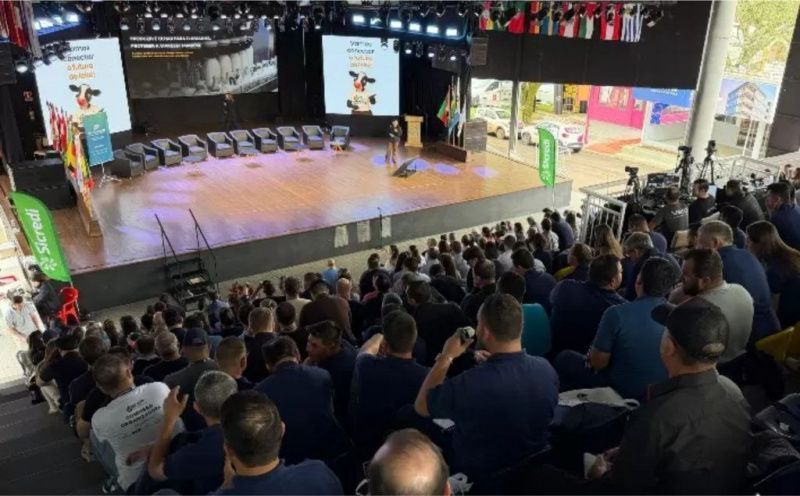
Commercial milk production in Rio Grande do Sul is increasingly concentrated among fewer farms, with larger volumes being produced by the holdings that remain in the sector. Consultant Wagner Beskow said farms producing more than 500 litres a day generally have better conditions for meeting dairy processors’ collection requirements. He also recommended simpler farm structures, integrated decision-making and organised routines for both livestock and workers.
Farm size alone does not determine whether producers remain in dairying. An Emater/RS survey found that 66.4% of the families consulted associated the physically demanding nature of the work with leaving the activity. A further 61.3% cited a shortage of family labour, while 37.8% mentioned a lack of interest among their children.
Jaime Ries, a state technical adviser at Emater/RS, described the withdrawal from commercial milk production as a multifaceted process. The factors identified included economic conditions in the dairy chain, work organisation, labour availability, relations between generations and alternative sources of income. The findings also highlighted working conditions and family succession as issues affecting the continuity of farms.
Speakers at the summit said that higher output per hectare would need to be accompanied by better milk composition and a higher financial return per litre. Total solids, particularly fat and protein, can affect bonuses paid by processors under their purchasing criteria. Beskow reported that the combined fat and protein content of milk from Rio Grande do Sul ranges from 6% to 7.5%, compared with an average of 9.17% in New Zealand. The production cost cited for the state was US$5.82 per kilogram, versus US$3.33 in New Zealand.
Glauco Carvalho, a researcher at Embrapa Gado de Leite, identified forage availability and family participation as features of the state’s dairy sector in competition with countries including Argentina and Uruguay. He also described a process of farm consolidation and expansion intended, in part, to improve collection logistics and milk quality. Larger units can reduce the number of stops required to collect milk from small farms, although the prevalence of small and medium-sized rural establishments may constrain the pace of expansion.
The Milk Summit Mercosul 2026 brought together more than 750 participants on October 14th and 15th. The programme included 27 speakers and panellists, four discussion sessions and 11 startups in the Láctea Innovation Arena. Darlan Palharini, the event’s coordinator and executive secretary of Sindilat, confirmed that another edition will be held in 2027. The summit was organised by Sindilat, Seapi, the Ijuí municipal government, Emater/RS-Ascar, Sebrae/RS, Suport D’ Leite and Impulsa Ijuí, with support from companies and institutions connected to the dairy chain.