NARO and Trade for Jobs Uganda sign agreement to commercialise dairy technologies
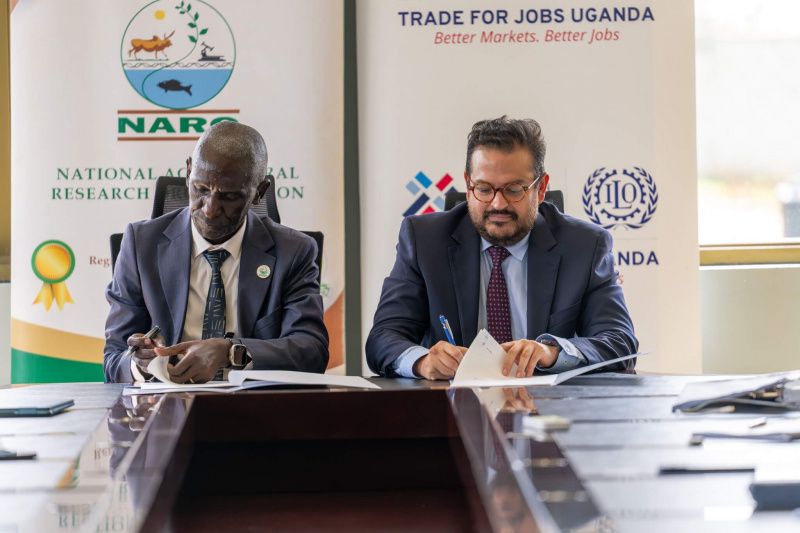
The memorandum was signed at the National Livestock Resources Research Institute (NaLIRRI), NARO’s facility at Nakyesasa in Wakiso district. It sets out cooperation on developing dairy technologies, transferring them to users and supporting their commercial uptake. The partners intend to improve connections between researchers and businesses throughout the sector, including processors, farmer cooperatives, milk-collection centres and agricultural input dealers. Their stated objectives include greater productivity, improved competitiveness, higher incomes and broader market opportunities.
The agreement follows an expansion in Uganda’s milk output and export earnings. Figures from the Ministry of Agriculture, Animal Industry and Fisheries put milk production at 5.4 billion litres in 2024, compared with 2.7 billion litres in 2020. Exports of milk and dairy products were worth $285.4 million in 2024, up from $264.5 million a year earlier. The partnership aims to make agricultural technologies more accessible and commercially viable as the industry develops as a source of income, trade and employment.
NARO’s director-general, Dr Yona Baguma, said Uganda had made substantial investments in agricultural research and technology development. He called for the resulting innovations to reach farmers, businesses and other users who could apply them to raise productivity and earnings. Baguma said the changing dairy industry offered opportunities for enterprises and individuals to earn sustainable livelihoods. He cited NARO’s anti-tick vaccine among technologies with potential benefits for dairy and livestock production. The vaccine has already been rolled out, and he expects it to support further employment across livestock-related activities.
The partners plan to develop, test and expand commercially viable approaches through which private businesses can help users adopt technologies. Their work will also cover information and knowledge systems, engagement with sector participants and shared learning. Another objective is to strengthen NARO’s ability to sustain technology transfer that responds to market demand. NARO will contribute specialist expertise, select innovations suitable for wider use and make research findings and technical information accessible. It will also coordinate commercialisation strategies under its policy frameworks, translating research into practical applications suited to market requirements.
Trade for Jobs Uganda will contribute technical assistance for designing interventions, testing them and extending those that support technology transfer and uptake. That assistance will depend on available resources and the rules that apply. The project will also help NARO develop market-oriented methods for transferring technologies through both public-sector and commercial channels. The memorandum provides for regular review meetings at which the partners will examine implementation, address problems as they arise and consider ways to strengthen their cooperation.
The collaboration draws on a sector-selection study by Trade for Jobs Uganda that identified dairy and tourism as promising areas for trade expansion and improved employment outcomes. The project seeks to tackle market constraints and improve job opportunities, particularly for women, young people and those living in poverty. Its chief technical adviser, Fernando Martinez Cure, said the agreement combined NARO’s research and technology capabilities with the project’s expertise in decent work, market systems and inclusive growth. He said the partners aimed to turn research innovations into productive businesses, stronger markets and improved livelihoods.
NARO is Uganda’s agency for conducting, coordinating and overseeing agricultural research, with a remit to develop and promote innovations supporting productivity and livelihoods. Trade for Jobs Uganda is an initiative jointly run by the International Labour Organization and the International Trade Centre. It works in dairy and tourism to use trade to support decent employment and income generation. Its objectives include improving sector performance, widening access to markets and creating opportunities for micro, small and medium-sized enterprises. Through the dairy agreement, the partners also aim to support Uganda’s ambitions for agricultural productivity, value addition, agro-industrial development and employment.