Lecherías del Bienestar distributes over 280,000 litres monthly in Mexico’s Celaya
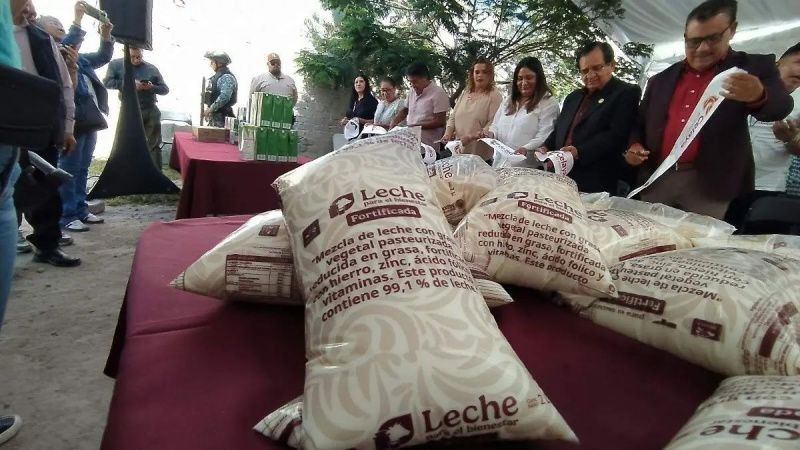
The new outlet is at 239 Durango Street in the Imperial neighbourhood. Celaya’s mayor, Juan Miguel Ramírez Sánchez, attended the inauguration alongside María Carmen Guerrero Jiménez, the federal programme’s deputy manager in Guanajuato. The opening brings the state’s operating network to 371 milk outlets. The federal Leche para el Bienestar programme, also identified as Liconsa, supplies fortified milk through outlets serving urban neighbourhoods and rural communities with high levels of socioeconomic vulnerability.
The programme distributes cow’s milk. Its retail price represents a saving of more than 68% against commercial pasteurised milk, which averages more than 24 pesos a litre on shop shelves, according to the report. Grocery shops and supermarkets in the Bajío region also sell blended products containing imported dried whey, modified starches and hydrogenated palm-based vegetable fats. The report describes these products as being marketed under confusing names and competing with conventional milk.
Raw milk collected from farms undergoes processing at a plant, either through continuous pasteurisation above 72°C or ultra-high-temperature treatment at 138°C for four seconds. The milk is packed aseptically in two-litre, double-layer bags. The report describes this packaging as protecting the milk-fat emulsion and the structure of its casein micelles. Distribution centres maintain a cold chain at 4°C to preserve the product’s physical and chemical stability and control changes in acidity before it reaches households.
The milk is fortified with iron, zinc, folic acid and vitamins A, D, C and B-group vitamins. The report links these nutrients to efforts to combat iron-deficiency anaemia and support children’s cognitive development. The distribution network forms part of the federal food-subsidy programme serving households in the municipality and elsewhere in Guanajuato.
The programme’s procurement arrangements connect it with dairy farms in Guanajuato and the Bajío valleys. According to the report, cattle feed accounts for more than 70% of running expenditure per litre produced on local farms. Feed inputs include maize silage, alfalfa hay and commercial protein concentrates. Public collection centres and milk-purchasing programmes provide small and medium-sized farms with an outlet at guaranteed prices. The report says payments help producers buy veterinary supplies and carry out milking-parlour disinfection to control environmental mastitis amid fluctuations in forage harvests.
The report identifies coordination between Celaya’s municipal government, Liconsa’s state management and community organisations as necessary to extend enrolment in outlying neighbourhoods and ejido communities. It calls for faster registration procedures for female heads of household, children and older people, alongside coordination of daily deliveries. It also advocates increasing purchases of locally produced raw milk from technologically equipped farms in Guanajuato to support the operation of community milk outlets.