Leche para el Bienestar opens four milk outlets in Mexico for 1,263 beneficiaries
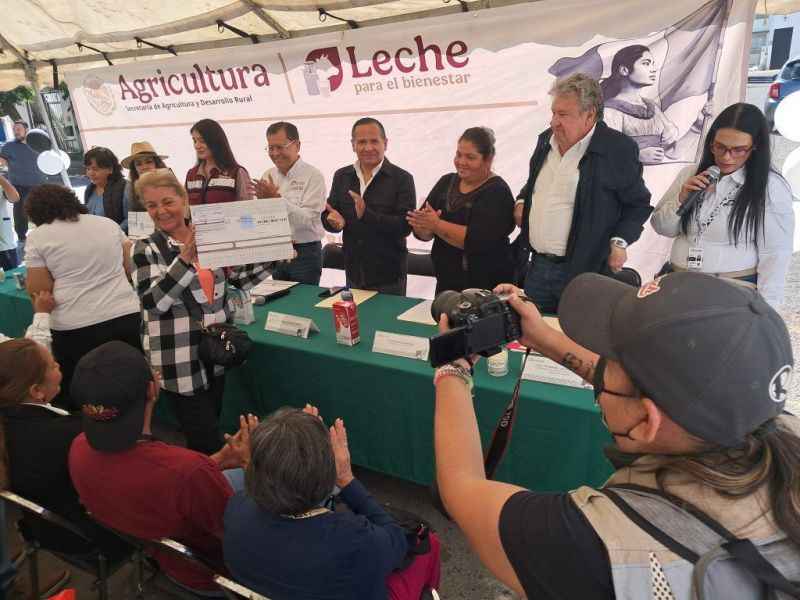
The outlets expand the Programa de Abasto Social de Leche in the Guadalajara metropolitan area. They are located in Las Palmas, Pedregal de Santa Martha, Praderas de Tonallán and Puente Grande, in densely populated areas affected by urban deprivation. Víctor Hugo Pérez Rojas, the agency’s national operations director, attended the joint inauguration alongside J. Eduardo Almaguer Ramírez, its state manager, and Luis Manuel Calderón Badillo, its deputy supply manager. Local legislators and municipal councillors also attended.
The four sites will distribute a combined allocation of 1,200 litres, comprising 1,040 litres of subsidised milk and 160 litres of pasteurised milk sold under the Frisia commercial brand. Registered recipients include 921 children and adolescents aged between six months and 17 years, 156 elderly people and 156 women over 45. The beneficiary register also includes 10 pregnant women and people with disabilities. The milk is fortified with iron, zinc, folic acid and vitamins A, D and B-group vitamins, with children and elderly people among the programme’s priority recipients.
Milk supplied through the outlets comes from mechanised and partly mechanised dairy farms in Jalisco’s production basins. The production account accompanying the opening describes foremilk stripping and antiseptic teat sealing during machine milking as measures used to prevent environmental mastitis. After morning and evening milking, raw milk enters rapid-cooling tanks at 4°C to limit bacterial multiplication and stabilise titratable acidity. Industrial processing involves continuous pasteurisation at temperatures above 72°C or ultra-high-temperature treatment at 138°C for four seconds.
The account places the expansion against a retail market in which neighbourhood shops and street markets sell dairy blends and milk substitutes. It describes products made using imported dehydrated whey, modified starches and hydrogenated palm oils, sold cheaply as cow’s milk. The federal programme supplies cow’s milk at preferential prices supported by public subsidies. Commercial pasteurised milk in supermarket chains commonly costs more than 24 pesos per litre, according to the report. It presents the subsidised distribution network as a means of reducing milk expenditure for vulnerable households.
Jalisco is Mexico’s largest milk-producing state. The report links the social supply programme to dairy farms in Los Altos and the state’s central region, where feed accounts for more than 70% of operating expenditure per litre produced. Rations include maize silage, alfalfa hay and commercial protein concentrates. These costs form part of the operating conditions facing producers supplying public purchasing programmes such as Leche para el Bienestar.
According to the account, regular purchases through public schemes give farmers greater certainty over farm-gate sales and reduce their reliance on informal collectors or small-scale cheesemakers that pay lower producer prices. It also describes fortnightly cash flows as a source of funds for veterinary supplies and farm biosecurity, amid rising forage costs. The report connects the procurement system with the finances of family-run dairy farms supplying the regional milk market.
The operational priorities identified for the new outlets include coordination between Leche para el Bienestar’s management and Tonalá’s municipal government, punctual refrigerated deliveries and maintenance of the cold chain at sales points. The account also calls for faster beneficiary re-registration to accommodate additional families seeking access to the programme. At the procurement level, it identifies increased collection of domestically produced milk at regional collection centres as a means of strengthening the agency’s supply operations relative to imported milk powder.