Lala launches VacOso cup and Chocolate Abuelita partnership for Day of the Dead
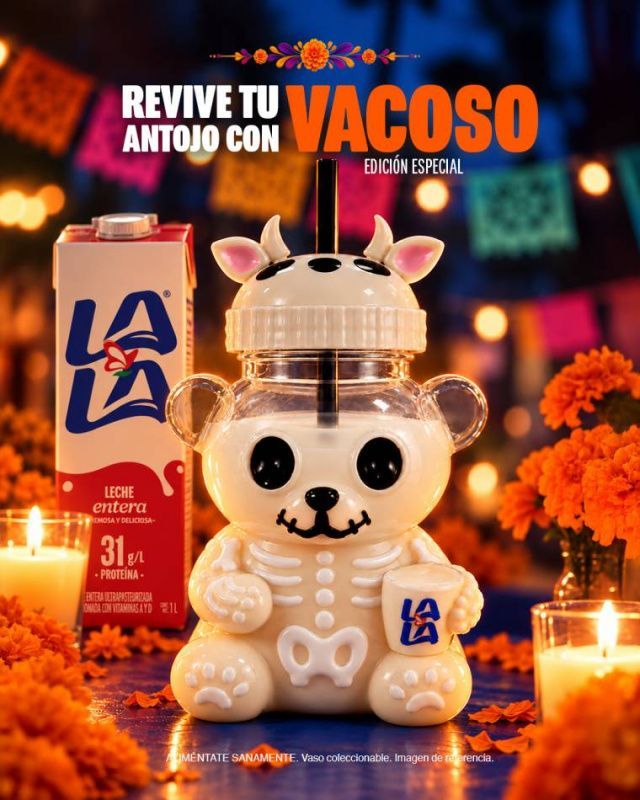
The VacOso cup takes its design from viral interactions among consumers on social media and will be offered through e-commerce and rapid-delivery platforms. The collaboration with Chocolate Abuelita centres on the custom of dipping pan de muerto, the bread associated with the holiday, into a drink. Lala’s programme includes large-scale tasting sessions at supermarket chains across Mexico, alongside an activation at the Gran Desfile de Día de Muertos on Paseo de la Reforma in the capital.
Andrea Zavala, Grupo Lala’s corporate manager for Masterbrand Leche, said the campaign aims to connect online conversations with family meals. She described an approach that turns culinary traditions into retail promotions while promoting the value of milk against alternative products. The campaign places fluid cow’s milk within established family celebrations and combines social-media engagement with activities in modern retail outlets.
The source article places the initiative in a market where dairy blends and plant-based drinks compete with milk. It describes low-priced products made with imported dried whey, modified starches and vegetable fats derived from palm or soya on the shelves of both traditional shops and supermarkets. It presents campaigns highlighting the taste and nutritional composition of fortified milk, including its bioavailable calcium and high-quality protein, as part of processors’ response to that competition.
The article also describes the production requirements associated with seasonal demand for milk used in hot drinks and traditional baking. In supplying dairy regions, particularly the Comarca Lagunera, these include planning at intensive dairy farms, mechanised milking, teat disinfection and health controls against conditions such as environmental mastitis. After morning and evening milking, milk must enter rapid-cooling tanks at the farm and reach 4°C to limit bacterial growth and increases in titratable acidity.
At processing plants, the article describes continuous pasteurisation above 72°C or ultra-high-temperature treatment at 138°C for four seconds, followed by aseptic packaging. It links processing controls to preserving the properties of casein micelles and milk-fat globules that contribute to consistency and creamy texture. These operational details accompany its account of the supply chain serving the seasonal campaign.
On costs, the article says the dairy industry faces fourth-quarter increases in refrigerated distribution expenses, packaging resins and fuel for delivery fleets. At farm level, feed—including maize silage, alfalfa hay and protein concentrates—accounts for more than 70% of operating expenditure per litre produced. The article presents formal-retail promotions as a means of supporting sales volumes and margins, absorbing additional operating costs and maintaining raw-milk purchases from affiliated farms, whose producers receive fortnightly payments.