Kazakhstan increases ice cream output by 57% to record 77,500 tonnes
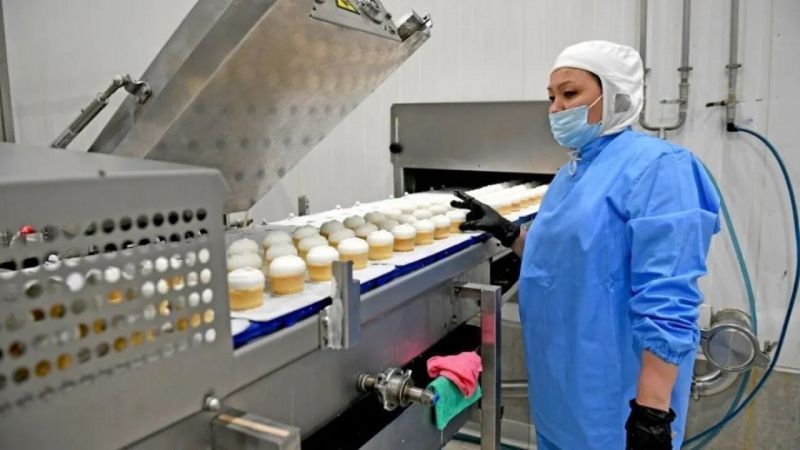
The summer expansion in output was accompanied by a sharp monthly increase: in June, manufacturers produced more than 20,000 tonnes, twice the volume recorded in May. Over the eight-month period, domestic sales of ice cream and edible ice in Kazakhstan totalled 72,600 tonnes, exceeding the previous year's figure by almost 61%. Total market supply reached 87,900 tonnes, up 47.7% compared with January–August 2025. Kazakh producers accounted for 88.2% of market supply. Their share rose by 5.2 percentage points over the year, while imported products accounted for 11.8%.
Over the same eight-month period, ice cream exports increased by 28.9% to 15,300 tonnes. This exceeded the export volume recorded in every full year since 2020. Export destinations included Russia, Kyrgyzstan, Uzbekistan, Tajikistan and Mongolia. Export sales reached $59.5 million in January–August 2026. Russia generated almost 70% of export revenue, retaining its position as the largest buyer of Kazakh ice cream.
The expansion of the production base followed the opening of an additional factory by Kazakhstan's largest ice cream producer in 2025. The facility was built in Almaty Region at a project cost of approximately 18 billion tenge. By the end of 2025, the region's specialised production capacity had reached 125,600 tonnes, an increase of 64.6% compared with January. The region accounts for 68% of the country's ice cream and edible ice production capacity and 63.3% of actual output.
The production base also changed in Almaty and three regions: Turkistan, East Kazakhstan and Karaganda. East Kazakhstan Region recorded the largest relative increase in capacity, at 86.4%. Nationwide, ice cream and edible ice production capacity stood at 184,700 tonnes by December 2025, approximately one and a half times the level at the start of that year.
Average capacity utilisation across the industry was 49.4% in 2025. Regional figures varied considerably: manufacturers in Almaty used 90.7% of their capacity, while those in Kostanay Region used 77.8%. The figure was 29.6% in Astana and 23.4% in East Kazakhstan Region. Equipment utilisation in Shymkent did not exceed one-third. Thus, Almaty and Kostanay Region recorded the highest equipment utilisation rates among the regions listed.
According to the Bureau of National Statistics (BNS), producer selling prices rose by 9.5% over the first nine months of 2026. Consumer prices for ice cream and sherbet had increased by 13.2% over the corresponding period of 2025. In 2026, retail price increases outpaced those at the producer level, while consumer price growth was faster than a year earlier.
February, March and July were among the months with the most notable consumer price increases in 2026. In February, ice cream and sherbet prices rose by 2.8% compared with January. The month-on-month increase was 2.5% in March and 2.2% in July.