India’s Kumbalad Dairy Farm expands from four cows to 70 in six years
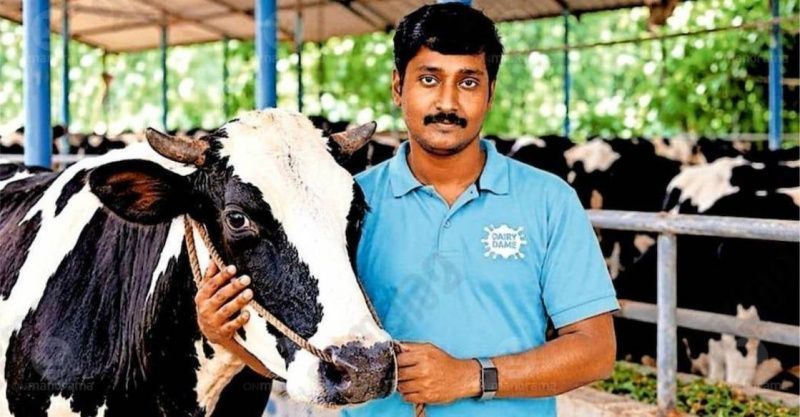
The farm, in Madakkimala, Muttil, has 40 lactating animals, with individual daily yields ranging from 20 to 40 litres. Just 10% of its milk is sold fresh; the remainder goes into processed products marketed under the Dairy Dame (Paalkkari) brand. Its range includes buttermilk, curd, ghee, paneer, peda, gulab jamun, almond milk and lassi. Athira manages the brand, and the couple use no preservatives in either their fresh milk or processed products.
Anoop became interested in dairy farming after reading a newspaper account of formalin being detected in milk. During his initial enquiries, he learned about farms that had closed and others facing accumulating losses. He examined their difficulties before setting up his own operation and attributes its subsequent growth to that preparatory research. His stated principle is to sell milk he would willingly give his daughter. Both he and Athira are engineers. Anoop works for KLA Corporation, a semiconductor company based in California, and can work remotely for ten months each year.
Breeding and nutrition are central to Anoop’s approach. He keeps high-yielding, purebred cattle and breeds successive generations with the aim of improving milk output and resistance to disease. The couple grow fodder across 10.5 acres, planning cultivation around the herd’s dietary requirements. They also provide feed intended to balance the animals’ intake of essential nutrients. Sex-sorted semen is used to raise the likelihood that calves will be female.
The farm operates its own feed mill and feed plant. Maize, bran, mineral mixtures and other ingredients are combined there to produce cattle feed, giving the owners control over what their animals eat. Fodder harvesting is mechanised, and material not immediately needed is stored in a silage bunker for subsequent use. These arrangements sit alongside the farm’s cultivation of feed crops for the herd.
Individual animal records are held in the Milk Cloud digital register. These cover milk production, feeding requirements, vaccination timetables and expected calving dates, with reminders delivered to Anoop’s phone. The system allows him to retrieve information without relying on memory or searching paper records. Artificial-intelligence-based technology is also used to help allocate work to employees.
Inside the cowshed, temperature sensors trigger fans and sprinklers automatically when required. A separate device attached to the milking machine checks for small changes in milk that could indicate mastitis, an inflammation affecting the udder. The farm uses this equipment to help identify health problems at an early stage.
Two biogas installations handle the dung produced by the cattle. Slurry left after processing is applied as manure to the fodder fields. Water used to wash the cowshed is treated before being used again for irrigation. Athira describes the principle behind the brand’s preservative-free products by saying that life matters more than shelf life.









