Juana de Vega Foundation: 17 Galician farms averaged €27,656 margins in 2025
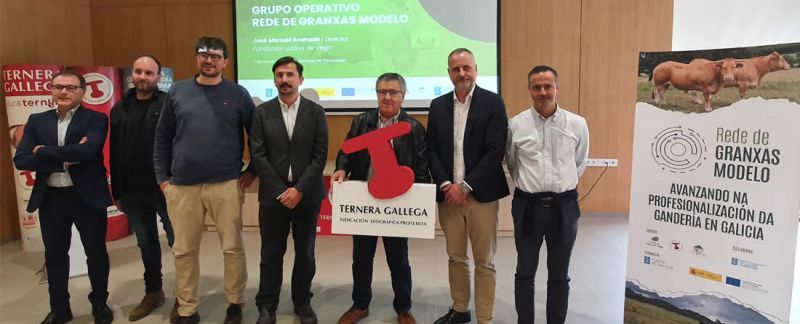
The Galician Model Farm Network Operational Group presented its findings on 21 October at the headquarters of the Regulatory Council for the Ternera Gallega and Vaca Gallega-Buey Gallego protected geographical indications (PGIs). This is the third report produced under the initiative and examines the 2025 accounts of 17 family-run suckler cow farms. The average farm had 54 cows and used 62 hectares of agricultural land, with annual output equivalent to 11,123 kilograms of carcass weight. The animals are born, reared and finished on the same farms. They are marketed as Ternera Gallega Suprema, a category covered by the Ternera Gallega protected geographical indication.
The annual accounts showed average revenue of €110,572 per farm and expenses of €82,916. The calculation of expenses includes an imputed remuneration for the owners' labour. The cost per kilogram sold was €7.45, while revenue, including subsidies, reached €9.94. The resulting margin was €2.49 per kilogram, compared with €0.25 in the previous year. The price received for calves rose from €5.97 per kilogram of carcass weight in 2024 to €7.29 in 2025. The report attributes the improvement in the participating farms' financial results primarily to this increase.
Before deducting the imputed remuneration for the owners' labour, annual disposable income amounted to €54,567 per farm. Recurring Common Agricultural Policy payments contributed an average of €30,352 to each farm. According to the study, these payments remain crucial to sustaining operations: revenue from animal sales alone is still insufficient to cover all costs while providing adequate remuneration for family labour. Livestock feed accounts for almost 39% of total expenditure in the production model analysed.
Price trends changed during 2026. The quarterly report published in September by the Ministry of Agriculture, Fisheries and Food put the year-on-year decline in national veal prices at 4% and that for yearling cattle at 13%. In October, some categories of male cattle at the Binéfar livestock exchange in Huesca recorded declines of between 13% and 15% compared with a year earlier. Ministry data also show a 10.2% decrease in Spanish households' purchases of fresh beef during the first six months of 2026. Live cattle exports fell by 64% in volume, while meat production remained relatively stable. The analysis identifies weak demand as one of the factors putting downward pressure on prices.
Alongside changes in selling prices, farms are facing pressure on their expenses. The document links pressures in energy and raw material markets to the international geopolitical situation, particularly the conflict in the Middle East. Fuel, transport, fertilisers and livestock feed are among the affected expenditure items. Drought also reduced the pasture and forage available on affected farms, forcing them to purchase more feed. According to the analysis, the combination of lower livestock prices and upward pressure on these input costs threatens to significantly reduce margins during 2026.
The report also examines management and reproductive indicators. The fertility rate stood at 81%, and the average interval between calvings was 418 days. Calf mortality was around 11%, with most deaths occurring at calving and during the first weeks after birth. The authors identify improved reproductive performance and fewer calf deaths as ways to market more calves per cow. According to the study, these changes would allow farms to make better use of available resources and reduce the cost per kilogram of meat produced.
The Juana de Vega Foundation, the Regulatory Council for the Ternera Gallega and Vaca Gallega-Buey Gallego PGIs, and the A Carqueixa cooperative lead the Operational Group, with support from the Mabegondo Agricultural Research Centre–Galician Food Quality Agency (CIAM-AGACAL). The initiative provides technical and economic analysis tools to support farm decision-making. The document links farm profitability to generational renewal and to the farms' contribution to rural economic activity, landscape conservation and wildfire prevention. Across Galicia, beef cattle farms manage more than 200,000 hectares of utilised agricultural area.









