Fazenda Colorado Seeks Expansion Beyond Araras After Reaching Production Ceiling
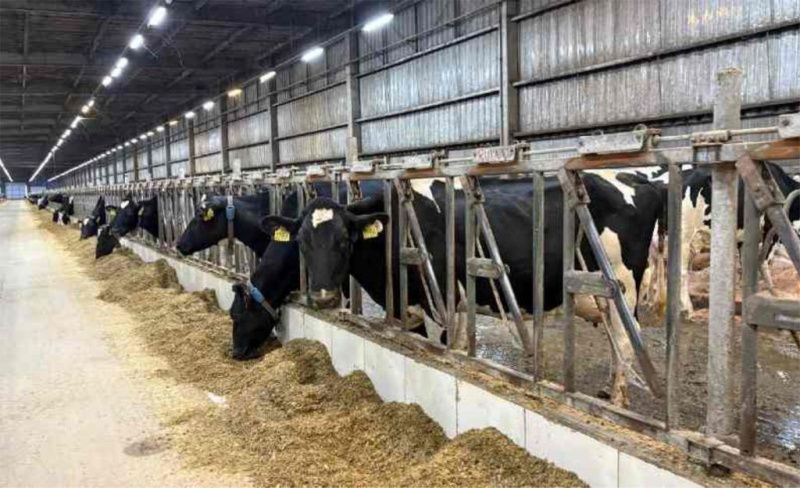
Fazenda Colorado occupies about 1,700 hectares. Its largest barn measures roughly 220 metres by 110 metres and houses around 2,400 cows in milk. The facilities were designed for feeding, animal handling, individual monitoring and livestock comfort.
According to Beto, increasing the herd without enlarging the infrastructure would place pressure on the resources supporting productivity. He describes scale as a combination of output, productivity, cost control and the ability to spread investment in technology and infrastructure, rather than simply adding more animals.
The farm was Brazil’s largest milk producer for 12 consecutive years. It lost that position in the 2026 Top 100 ranking produced by MilkPoint with the Brazilian Association of Milk Producers, known as Abraleite. The report nevertheless associates Colorado with high production despite the farm not having the country’s largest milking herd.
Growth beyond the herd
While a second property has not yet been established, Colorado has expanded its dairy processing activities. Products sold under the Xandô brand include whole, semi-skimmed and skimmed type-A milk, A2 milk, cheese and yoghurt. The business uses milk produced at scale and adds processing to the portfolio.
The farm also sells heifers, with about 500 animals marketed each year. Most buyers are in Minas Gerais, while customers in Brazil’s Northeast have more recently joined the market. At an average price of approximately R$18,000 per animal, the activity generates about R$9m annually and accounts for nearly 10% of the farm’s business.
Beto says the aim is not simply to produce more than other farms. The stated priority is to consolidate an operation based on efficiency, quality and sustainability, including an environmental programme focused on regenerative practices.
Data cited in the report show that Brazil’s 100 leading dairy farms represent about 0.01% of the country’s nearly 1m producers and account for 4.7% of national milk output. For Colorado, the expansion question concerns both where additional production could be located and which businesses could capture value once the existing property reaches its physical capacity.