Derek vs Derek takes Devon neighbours’ farming dispute to cinemas across five countries
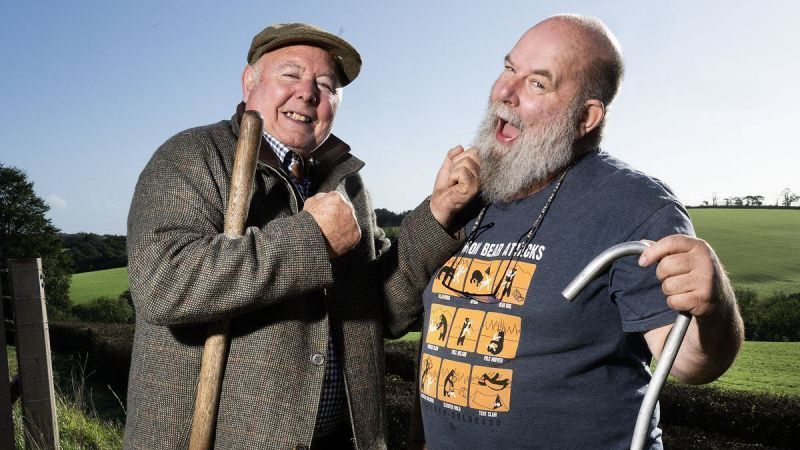
Dawson first visited Gow in 2022, intending to document his rewilding work. After meeting Banbury, he decided to make both neighbours the subjects of the production. Their disputes had ranged from silage leakage and escaping wild boar to the frequency of hedge cutting. The film is now reaching audiences through screenings at cinemas as well as village halls, agricultural buildings and farms, with New York among its overseas locations. In its early scenes, Banbury rejects the prospect of reconsidering his approach, saying that intensive agriculture supplies food for a growing population and that he has followed that approach for 50 years.
Banbury, 72, is the third generation of his family to farm his holding west of Okehampton in Devon. He succeeded his father in 1976 and keeps approximately 600 cattle for milk and beef on 400 acres. The farm also produces barley, hay and silage to feed the animals. He lives there with his wife, Linda, alongside their four adult children and grandchildren. His son James starts work at 3.30am, ahead of the first milking at 4am, while Linda operates holiday cottages. Banbury maintains closely cut hedges, repaired fences and orderly fields, describing neatness as a source of satisfaction. His current financial concerns include the price received for milk: he says it has dropped to 38p a litre from nearly 50p in the previous year. The farm is also operating amid rising diesel prices and increasingly erratic weather.
Gow, 61, grew up in Biggar, Scotland, outside a farming family. Before settling in Devon, he worked in country parks and spent a summer at Gerald Durrell’s zoo in Jersey. He has written conservation books and is credited with helping return beavers to Britain. He moved beside Banbury about two decades ago and initially ran a more conventional livestock enterprise, with roughly 1,500 sheep and 120 beef cattle. Banbury has assisted him on several occasions, including extracting a stranded Land Rover with a tractor and helping with a calving emergency. More recently, Gow drove a quad bike carrying himself and his girlfriend into a pond.
Concern about environmental deterioration and intensive agriculture prompted Gow to change the management of his approximately 400 acres. He stopped using fertilisers and pesticides, abandoned mowing and mechanical hedge cutting, and broke underground drainage systems to form ponds for wading birds. He brought in fallen timber and gorse to provide wildlife habitat, together with rocks intended to attract snakes. His breeding and reintroduction work has involved thousands of water voles, dozens of wild boar, and species including storks, wildcats, red-backed shrikes, glowworms and adders. He has also released beavers and advocates the return of wolves. Gow describes intensively managed farmland as lacking the birdsong, insects and other wildlife he wants to restore.
The conservation context includes an 80% decline in Europe’s insect population over three decades, as cited in the article. The Wildlife Trusts describes Britain as among the countries most depleted of nature, with one species in six threatened with disappearance, including dormice, water voles and wildcats. Gow believes farmers could reverse the extinction crisis by allocating 10% of their lowest-yielding land to wildlife. His own operation relies on grants and donations whose availability varies, while he must meet a monthly payroll. Banbury says Gow has wealthy supporters, some of whom stay in Linda’s holiday accommodation. Gow’s efforts have also caused friction locally: boar repeatedly escaped and ate sheep carcasses, beavers damaged trees, and a gathering he organised to discuss returning wolves to the English countryside provoked opposition.
Banbury continues to defend intensive livestock production and says people depend on his farm. He objects to starlings entering cattle sheds, fouling them and spreading disease, and regards Gow’s enthusiasm for wolves as misguided. He has also criticised Keir Starmer and Rachel Reeves over their support for farmers. Nevertheless, he says he enjoys seeing butterflies, bees, dragonflies and other birds on neighbouring land. Following Gow’s suggestion, he agreed to fence cattle out of some less productive areas and leave the vegetation uncut. He has also reduced his hedge trimming to some extent. Asked whether he had changed, Banbury acknowledged that he had, while stressing that the farm continued to earn its living.
Gow remains opposed to Banbury’s fertiliser use but now describes his neighbour as a highly capable farmer and recognises the care given to the cattle. Watching the operation has changed his view of its treatment of animals; he says he would be content to be a cow there. Both men approve of the documentary. Their practical relationship also continues: Banbury says he is willing to use his tractor to help Gow again whenever another rescue is needed.