Brazil’s spot milk price falls to R$2.586 a litre as production costs rise
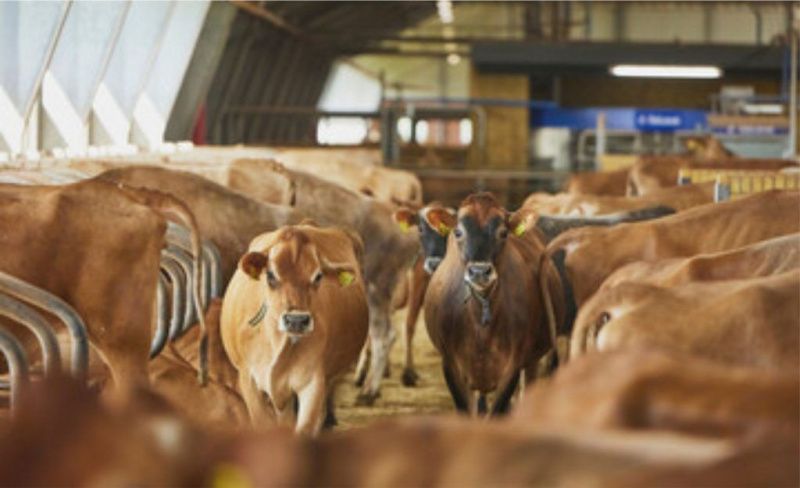
Minas Gerais recorded a spot-price decline of R$0.120 a litre in the second half of October, taking its average to R$2.589. In Goiás, a reduction of R$0.040 brought the average to R$2.490. The falls were smaller than those recorded in the first half of the month. Farmgate payments for August milk collections, meanwhile, had remained broadly steady: Cepea’s net national average was R$2.8869 a litre, compared with R$2.8761 in July and R$2.7464 in June. The series cover different transactions and reference periods. Cepea measures farmers’ receipts for collected milk, whereas spot quotations cover raw-milk transactions between participants in the supply chain. Producers are concerned that weaker spot negotiations will feed into subsequent adjustments to payments from processors.
Milk availability increased as domestic collections recovered. Cepea’s milk-collection index, ICAP-L, rose by 2.38% in July from June and by another 3.86% in August. The increase accompanied a seasonal production recovery, particularly in southern Brazil. Rainfall in other producing regions could also support supplies in the coming months, depending on weather and farm management. Processors have faced difficulty selling some dairy products amid subdued domestic demand. According to MilkPoint Mercado, retailers have been buying cautiously, replenishing stocks selectively and pressing dairies for lower prices. Cepea and MilkPoint Mercado’s short-term analyses point to continued price pressure from higher collections, substantial imports and difficulties moving processed products while domestic demand remains weak.
Cepea’s September survey of the São Paulo wholesale market recorded an inflation-adjusted monthly decline of 4.76% for UHT milk, to approximately R$4.69 a litre. Mozzarella fell by 2.77%, to about R$34.91 a kilogram, while milk powder sold in smaller packs declined by 4.38%, to R$29.63 a kilogram. Figures for October through the 15th showed further falls of 2.32% for UHT milk and 2.05% for mozzarella, with average prices of R$4.54 a litre and R$34.97 a kilogram, respectively. MilkPoint Mercado’s separate fortnightly survey put mozzarella at R$31.30 a kilogram, down from R$31.60. Its latest quotations showed whole-milk powder unchanged at R$24.00 a kilogram, skimmed powder lower at R$23.30 and smaller-pack milk powder higher at R$30.00.
Imports also added to domestic availability. Brazil purchased dairy products equivalent to 249.6 million litres of milk in September, according to Cepea’s analysis of figures from the foreign-trade secretariat, Secex. That represented an increase of 8.38% from August and 25.99% from September 2025. Milk powder accounted for approximately 69.8% of the imported volume, with cheese representing 29.6%. These purchases expanded buyers’ supply options and increased competition for Brazilian processors alongside the recovery in domestic milk collections.
Feed ingredients contributed to higher farm expenses. Cepea recorded a 0.84% increase in the cost of concentrates in September, with maize, soyabeans and soyabean meal all becoming more expensive. Its October bulletin showed that purchasing a 60-kilogram bag of maize required 23.19 litres of milk in August, against 22.54 litres in July. Farmers therefore needed more milk to buy the same quantity of grain, although the ratio remained below the preceding 12-month average of roughly 28 litres per bag. The effect on individual farms depends on productivity, the share of concentrates in operating expenses, input-purchasing terms and the milk prices they receive.
International auction prices moved upwards. At the 414th Global Dairy Trade auction, the overall index increased by 2.5%, with an average price of $4,021 a tonne, according to MilkPoint Mercado. Whole-milk powder rose by 4.4%, to $3,760 a tonne, and skimmed-milk powder gained 3.4%, reaching $3,975. The transmission of international price movements to Brazil depends on exchange rates, the competitiveness of imported products, domestic milk availability and demand.
Weather is another factor in Cepea’s outlook. In its October bulletin, the research centre assessed that potential El Niño effects on weather conditions could constrain subsequent growth in milk supply and moderate the pace of price declines. Producers’ forthcoming payment indicators will show how October’s trading conditions affect farmgate receipts. The source also identifies domestic collection volumes, imports, sales of UHT milk, cheese and milk powder, and herd-feeding costs as factors affecting market conditions through the start of 2027.