Brazil’s Milk Production Has Stalled as World’s Fourth-Largest Producer
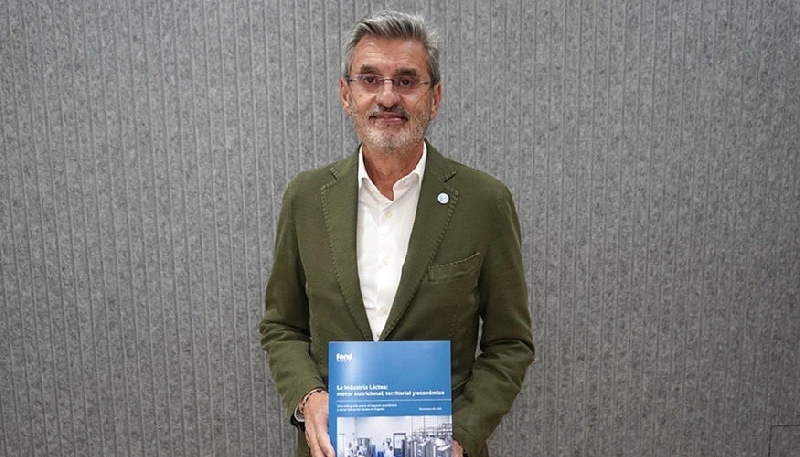
A study by economist Tagore Villarim de Siqueira of Brazil’s National Bank for Economic and Social Development (BNDES) examines the country’s milk chain and its regional differences. Siqueira holds a master’s degree in economic theory from the Federal University of Pernambuco. The paper was accepted on September 22nd 2026 and published in volume 2, issue 16 of Open Minds International Journal.
The Northeast was the exception to the broader pattern described in the study. Milk output there increased by an average of 5.24% a year, while the other Brazilian regions recorded negative average rates. Pernambuco produced 1.457bn litres in 2024, an annual rise of 9.21%, making it the region’s leading producer and Brazil’s seventh-largest state producer. Ceará recorded 1.210bn litres, up 6.44%.
Consumption has not returned to its previous peak. Brazilians consumed 178 litres per person in 2024, below the 180-litre level recorded in 2013 and 2014. Using 200 litres a year—equivalent to a 500ml glass each day—as a reference, the study places consumption 11% below that level. Consumption in Ireland, Denmark, Turkmenistan, Luxembourg and Switzerland ranges from 414 to 600 litres per person.
Imports supply part of domestic demand. At constant prices from March 2026, the dairy sector’s trade deficit totalled $6.887bn over the 2016-26 period. The annual average deficit was $454m between 2016 and 2022, rising to $929m between 2023 and 2025.
Within the Northeast, Sergipe was the only state to exceed the study’s 200-litre benchmark, with 296 litres per inhabitant. Piauí produced 21 litres per person and Maranhão 55. The main dairy areas include Pernambuco’s Southern Agreste, Ceará’s Jaguaribe Valley, Rio Grande do Norte’s Seridó region, and southern and far southern Bahia. The study identifies effects on employment and income in the semi-arid region and on efforts to reduce hunger.
The paper associates declines in the number of milked cows, particularly in the Northeast, with severe El Niño episodes in 2015-16 and 2023-24, which worsened drought conditions. It says the phenomenon is expected to be intense in 2026 and records Siqueira’s support for a preventive plan to limit losses.
Modernisation remains limited on farms. About 80% of dairy holdings use manual milking, 20% use mechanical systems and 2% have automated equipment. In the 2006 Agricultural Census, only 10.78% of holdings had cooling tanks: the share was 24% in the South, 10.76% in the Southeast, 1.26% in the North and 0.28% in the Northeast.
Prices paid to producers rose from R$2.07 per litre in January 2026 to R$2.75 in June. The first-half average was R$2.47, 14% below the figure for the same period in 2025. The study records the launch of a milk futures market on May 13th 2026, intended to protect producers and buyers from sharp price fluctuations. It also describes “tokenised cows”: animals fitted with smart collars that can serve as collateral for rural credit.
Siqueira’s proposed strategy covers quality programmes, innovation and technical assistance involving universities and Embrapa; access to automated milking, cooling tanks and refrigerated lorries; quality certification and geographical indications for artisanal cheeses; biodigesters and solar power; and tailored credit, a minimum price, regulatory stocks and tax incentives. The study also cites a federal programme created in 2003 to buy milk from family farmers for donation. Its budget was R$130m in 2025 and R$156m in 2026.