Bord Bia gives dairy farmers up to 28 days to correct audit issues
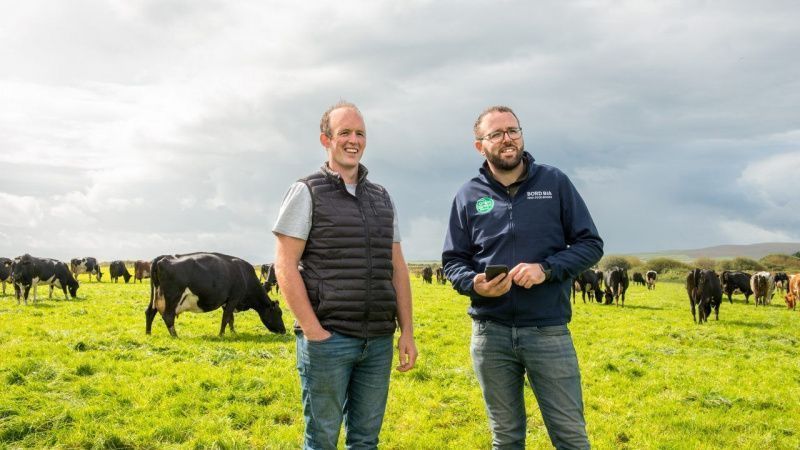
The scheme provides assurances for international buyers seeking evidence on sustainability, product quality and animal welfare. Bord Bia advises farmers to agree an appointment promptly when an auditor contacts them about renewal, helping maintain certification during the renewal process. An early inspection leaves the certification timetable unchanged: the following 18-month period begins when the existing certificate expires. A dairy audit generally takes between two and two-and-a-half hours, with preparation helping to reduce the time required.
The visit starts with a meeting at which the auditor outlines the procedure and answers the farmer’s questions. Farmer and auditor then tour the holding to examine livestock, accommodation, equipment and yard areas. Much of the assessment relies on observing farming practices and discussing routine operations. The auditor subsequently reviews documents and records to check their consistency with observations made during the tour. Findings are discussed as they emerge and reviewed again at a final meeting before the auditor departs.
Where an issue requires correction, the auditor explains the non-conformance at the end of the visit; identifying an issue does not result in failure on the day. For an unsafe lagoon, for instance, the auditor may ask for a photograph demonstrating that it has been secured. Farmers can provide evidence to the Bord Bia Helpdesk by text, email or post, or upload it through Bord Bia’s farm portal. They may authorise someone else, including a family member or neighbour, to submit it. Milk processors can also help with corrective-action submissions and associated questions. Farms with no identified issues do not need to complete this close-out procedure.
Hygiene checks cover the milking parlour and the area containing the bulk tank. Auditors look for cleanliness, orderly conditions, adequate maintenance, surfaces that can be washed and any apparent threat to milk hygiene. They may examine milk-collection documentation and analysis results to verify compliance with regulatory quality limits. Drinking-quality water must be available for washing hands and cleaning surfaces that come into contact with milk, while cleaning chemicals must be stored safely. A private well supplying water for dairy washing requires a test report issued within the previous three years, confirming no Enterococci or E. coli in a 100ml sample. Water supplied through a group water scheme does not require that report.
Safety documentation must also be complete and current. Farms need a Farm Safety Risk Assessment (FSRA), while holdings employing at least three people require a Farm Safety Statement (FSS) instead. The documentation is also a legal requirement intended to limit injury and ill health. Missing information, outdated material or a failure to review the assessment or statement can lead to a non-compliance. Bord Bia advises farmers to check before the visit that they hold the appropriate document and that it has been updated.
Medicine records must cover both purchases and treatments, extending at least to the previous audit. Each treatment entry needs the administration date, medicine name, amount used, identification of the treated animal and either the person administering it or the prescribing veterinarian. The record must specify the calendar date on which the withdrawal period ends; entering only its duration is a common compliance problem. Individual animals should be identified by their tag number or freeze brand. Group entries need enough information to identify every animal treated, such as a record covering all calves born between January 1st and March 31st. Purchase entries require the transaction date, product name, amount bought, and supplier’s name and address. Bord Bia recommends obtaining a veterinary account statement for the period since the previous audit and comparing it with farm records to identify omitted purchases.
In a recent survey of farmers following their audits, 97% considered the time taken reasonable and 99% regarded the auditors as professional. Bord Bia’s Helpdesk provides assistance with preparation and questions about the process. It can be reached on 01 5240410 from Monday to Friday, between 9am and 8pm.









