Bangladesh’s Animal-Feed Demand Is Projected to Reach 10m Tonnes by 2030
A study by Bangladesh Agricultural University presented the forecast at a seminar in Dhaka titled “Feed Growth Supporting Bangladesh’s Protein Demand”. The event was organised by the Feed Industries Association of Bangladesh and the US Soybean Export Council at the Dhaka Regency Hotel & Resort.
Poultry accounts for the largest share
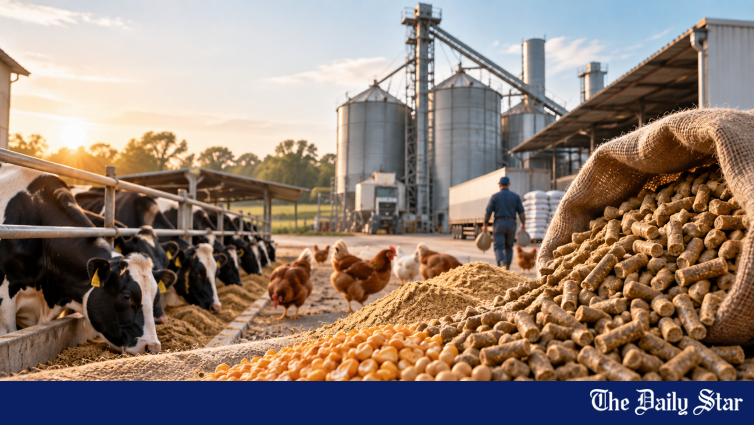
The study assigns 65% of projected 2030 feed demand to poultry. Fish farming is expected to represent 20%, while cattle would account for the remaining 15%.
Bangladesh’s feed industry produces nutritionally balanced rations for livestock growth, health and productivity. Common ingredients include rice bran, maize, soybean meal, fish meal and other raw materials available locally.
Efficiency and protein output
Md Safiqur Rahaman Shishir, head and associate professor of animal nutrition at BAU, said the sector should be assessed not only through feed prices but also through the efficiency with which feed is converted into edible animal protein. He said this measure was important as Bangladesh works towards greater protein security.
Shishir said the lowest-priced feed does not necessarily produce animal protein at the lowest cost. He also discussed improving the use of feed ingredients, raising productivity and reducing the quantity of feed needed for a given amount of protein.
Soybean and aquaculture
Khabibur Rahman, USSEC’s Bangladesh market lead, described the soybean value chain as important to the feed sector. Whole soybeans can be processed into soybean meal for animal feed and soybean oil for human consumption and other uses. USSEC supports the industry through technical assistance, workshops, seminars, information-sharing and partnerships with sector participants.
Rahman said animal health was linked to the quality of food consumed by people. He also said fish and other aquatic sources provide about 60% of the animal protein consumed in Bangladesh. USSEC supplies technical assistance to fish farmers and aquaculture producers.
Feed costs and sector capacity
Md Delwar Hossain, secretary of Bangladesh’s Ministry of Fisheries and Livestock, said animal protein was necessary for a healthy and well-nourished population and described quality feed as a basis for safe, high-quality protein production.
Md Shah Alam Khan, director general of the Department of Livestock Services, said feed accounts for roughly 70% to 75% of production costs in Bangladesh’s poultry and livestock industries. The forecast implies an increase of about 2.5m tonnes in annual feed demand between the present and 2030.