A production-cost-linked milk price shields an English dairy farm
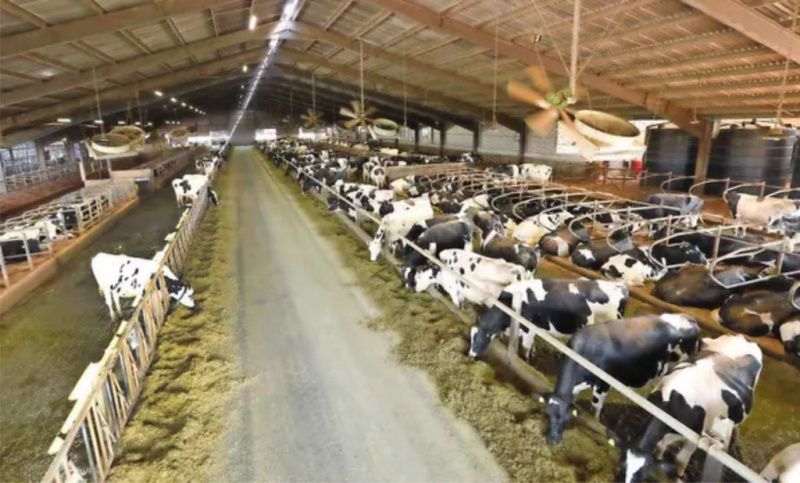
Allwood took over Huntington Hall Farm in 1997, when it had 245 cows across two holdings. The business now milks 1,050 cows on 640 hectares, of which only 80 hectares belong to the farm. The remaining 560 hectares are rented in 13 parcels, located roughly 20 minutes from the main holding.
The rented-land model has accompanied the farm’s expansion. Herd numbers rose from 350 cows in 2012 to 1,050 today. A further land purchase is under way, with the aim of reaching 1,200 cows by the middle of 2028. The new site includes 78 rented hectares and its buildings are due to be converted into housing for 650 replacement animals, freeing capacity at the main farm for 250 additional milking cows.
Land in the area costs about €17,000 per hectare. At Allwood’s average borrowing rate of 5.65% a year, the associated annual opportunity cost is close to €1,000 per hectare. Rent ranged from €150 to €300 per hectare, averaging €260 in 2025. Allwood said that renting leaves capital available for investment in milk production and avoids tying up substantial funds in land with a low return. He also said the arrangement makes family succession easier.
About 9.5m litres of milk a year, or 75% of the farm’s output, are supplied to Tesco through Müller. The contract uses a production-cost formula calculated by an independent auditor from data provided by the farm. In June 2026, the resulting price was 47 euro cents per litre, five cents above the farm’s production cost. The remaining milk is sold to Müller at its standard ex-factory price, slightly above 31 cents per litre, leaving a margin of about three cents over direct costs.
The contract does not allow the farm to increase volume within the cost-based arrangement. Allwood therefore keeps a large group of heifers, including animals produced with sexed semen and beef sires in part of the herd. This gives the farm scope to reduce culling and expand more quickly when milk prices rise, according to the account. In January, the farm also began using a new 72-stall external GEA rotary parlour, replacing a 40-stall unit bought in 2007. Milking more than 900 cows three times a day previously took seven hours; milking 920 cows now takes three hours with 2.5 staff per shift.
Allwood expects to automate the rotary parlour within five years, when he expects the cost of the technology to have fallen relative to labour costs. The transition facilities still hold only 750 cows. The farm’s proximity to the River Dee, which supplies drinking water to 3m people, also places greater regulatory attention on the management of phosphorus and potassium in manure. In 2025, the farm’s average milk price was €47.50 per 100kg, business income exceeded €725,000 and debt stood at €4,700 per cow. Allwood plans to remain active for another decade before becoming an adviser. His son Jack is targeting a herd of 2,000 cows by 2035 and runs Mootrition, which makes milkshakes and ice cream from the farm’s milk; the business generated €700,000 in 2025 and is expected to exceed €1m in 2027.